
The Science Behind Actsyl

Clinically Studied Actives, Naturally Derived
When hair starts shedding, most women look for answers before they buy anything. This page covers what causes shedding, which ingredients have published research behind them, and how we built a formula around them. Every study is listed at the bottom of the page.
Actsyl is built on two clinically studied, naturally derived actives: Redensyl® and Capixyl™. In a 2019 randomized trial, a topical combination containing both outperformed 5% minoxidil, the drug in Rogaine. We chose them to give women a research-backed option without prescriptions, hormones, or procedures.
85%
saw visible improvement in the Redensyl study
+79%
hair density in the Capixyl study
Nearly 2x
the growth of minoxidil in lab testing
0
hormones or drugs
Why Hair Sheds: The Hair Growth Cycle
A hair follicle grows hair for about four years, then rests for about four months before the hair falls out and a new one replaces it. Normally only about 10% of scalp hair is resting at any time.
A shock to the body can push many follicles into the resting phase at once. Dermatologists call this telogen effluvium. The extra shedding shows up 2 to 4 months after the trigger, which is why most women don't connect the two, and the share of resting hair can climb to 30% or more.
This type of shedding is non-scarring, so the follicles stay intact. That makes it the right time to support the scalp with a daily serum built on clinically studied actives.
What Causes Hair Shedding in Women
Most women who come to Actsyl are going through one of these changes. Each has been studied, and each tends to show up in the hair months later.
Hair loss after weight loss, Ozempic, and other GLP-1 medications
Rapid weight loss is a well-known trigger for telogen effluvium, and GLP-1 medications such as Ozempic, Wegovy, Mounjaro, and Zepbound have made it far more common. A July 2026 study in The BMJ found GLP-1 users had a 37% higher risk of hair loss than people on SGLT-2 diabetes drugs, and a 68% higher risk than people on DPP-4 drugs.
Women appear to be affected more than men. In a 2026 analysis of nearly 9,000 women, new hair loss within a year was recorded in 5.4% of tirzepatide (Mounjaro, Zepbound) users and 3.6% of semaglutide (Ozempic, Wegovy) users.
Postpartum hair loss
Heavy shedding after giving birth is common and driven by the drop in estrogen after delivery. It usually starts 3 to 4 months after birth and peaks a few weeks later. That can mean months of heavy shedding while you're caring for a newborn. A daily serum is a simple step to help reduce shedding through that stretch.
Hair thinning during perimenopause and menopause
Estrogen receptors sit in the hair follicle itself, one reason hair changes as estrogen declines. In a study of 178 women aged 50 to 65 published in Menopause, 52% had some degree of female pattern hair loss, and the rate rose with time since menopause.
Stress-related hair loss
A 2021 Harvard study in Nature found that a stress hormone keeps hair follicle stem cells in an extended resting phase by blocking a signal (GAS6) that normally wakes them up.
Air pollution and hair loss
Research presented at the 2019 European Academy of Dermatology and Venereology Congress found that fine dust and diesel particles lowered beta-catenin, a protein that drives hair growth, in human scalp cells. The more pollution, the larger the drop.
Whatever the trigger, Actsyl is formulated to help reduce shedding and support fuller-looking hair while your body adjusts.
Redensyl®: How It Works and Clinical Results
3% in Actsyl-3 and Actsyl-X Hair Serums
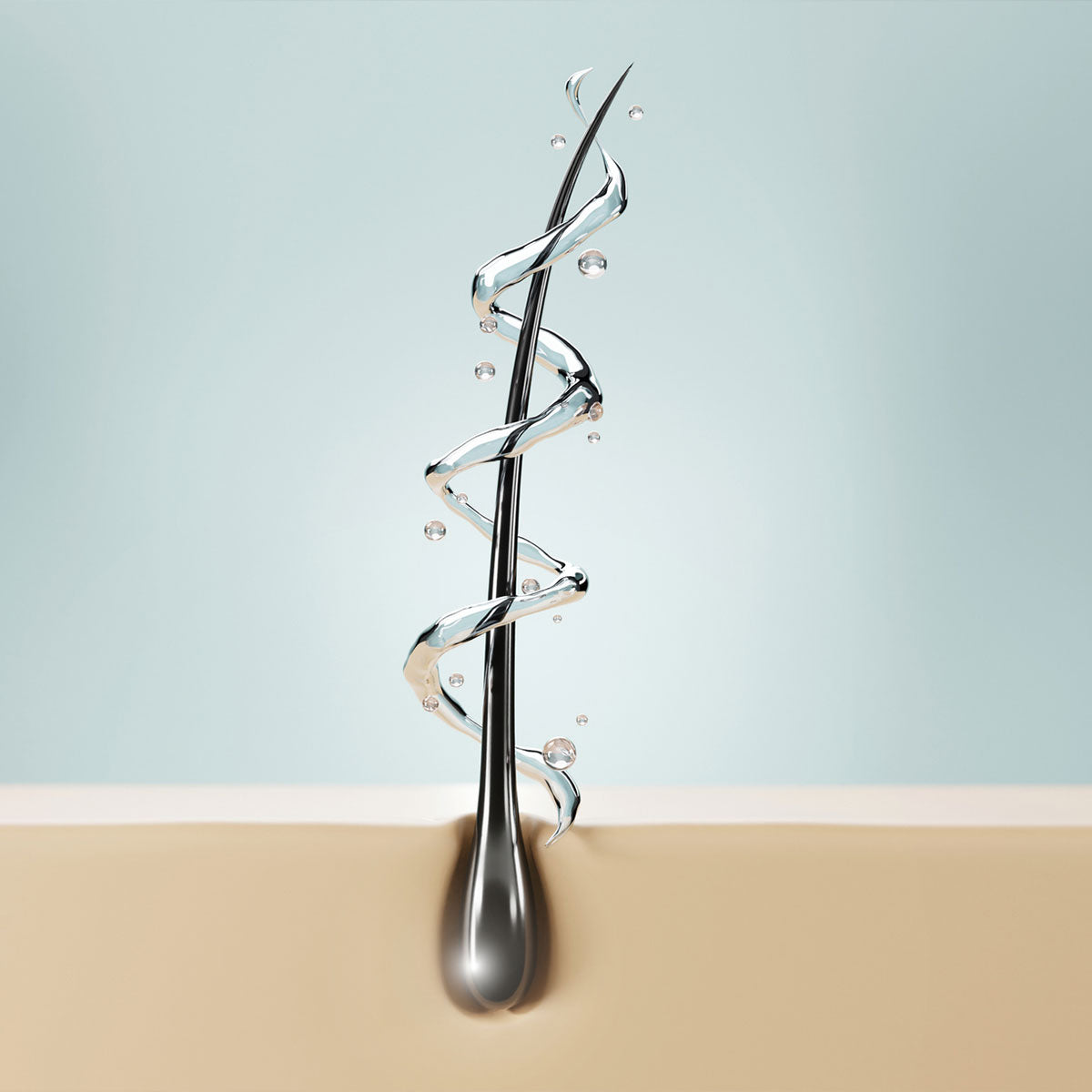
Redensyl is a naturally derived active that works on the stem cells inside the hair follicle. Its two patented plant molecules, DHQG and EGCG2, signal the stem cells that renew the follicle, while zinc and glycine help nourish new hair as it forms.
In the lab: on living human hair follicles, 1% Redensyl increased hair growth by 214% over untreated follicles in 10 days, nearly twice the result of 1% minoxidil tested alongside it.
In a clinical study: volunteers with thinning hair applied a 3% Redensyl lotion once a day for 84 days in a double-blind, placebo-controlled study:
- 85% of volunteers showed visible improvement
- Hairs in the resting phase fell by 17%
- Hairs in the growing phase rose by 9%
- Average hair density rose by 8%, about 10,000 new hairs
Actsyl serums contain Redensyl at 3%, the same level used in the clinical study.

Capixyl™: How It Works and Clinical Results
2% in Actsyl-3 and Actsyl-X Hair Serums
Capixyl pairs a biomimetic peptide, acetyl tetrapeptide-3, with red clover extract rich in Biochanin A.
How it works: in laboratory testing, Biochanin A inhibited 5-alpha reductase, the enzyme that converts testosterone into DHT. DHT is linked to shorter growth cycles and finer hair. The peptide supports the proteins that anchor each hair in the scalp.
In a clinical study: in Lucas Meyer Cosmetics' four-month, placebo-controlled study, volunteers applied a 5% Capixyl lotion each night:
- Hair density increased by 79%
- The ratio of growing to resting hairs improved by 46%, while the placebo group declined by 33%
- More than 70% of volunteers saw improvement
Actsyl serums contain Capixyl at 2%. Because it works on the DHT pathway without hormones, it suits women who want a non-hormonal option during perimenopause and menopause.
How the Formula Is Built
Clinically studied actives only work if the formula delivers them and gets used every day.
Supporting extracts: horsetail, green tea leaf, apple fruit, slippery elm bark, and larch wood extracts, plus panthenol (pro-vitamin B5) to condition the hair shaft, biotin, and a touch of menthol for a light cooling feel.
A lean preservative system: phenoxyethanol paired with caprylyl glycol and ethylhexylglycerin, which strengthen the system so less preservative is needed overall.
Dark glass packaging: shields light-sensitive actives and keeps the formula stable through the last drop.
Made for daily use: absorbs quickly with no greasy film on hair or pillows, so you can style right away or apply at night. Actsyl-X is the same formula without fragrance.
No drugs, no hormones, no procedures.
GMP Certified
Manufacturing facility
FDA Registered
MoCRA compliant
ISO 22716
International cosmetic standard
Solar Powered
Made in Los Angeles
Our Standards
Made in Los Angeles in a GMP-certified, FDA-registered facility that follows ISO 22716, the international standard for cosmetic manufacturing, and complies with the Modernization of Cosmetics Regulation Act (MoCRA). The facility runs on solar power.
Certified suppliers only. Redensyl and Capixyl come from the companies that developed and tested them.
Accepted worldwide. Our ingredients meet cosmetic regulations in the United States and the United Kingdom, where Actsyl has been sold for years.
What to expect: most customers notice less shedding in the first 2 to 4 weeks. Shine and feel improve next, and fuller-looking hair follows with consistent daily use.
Ready to Start Your Routine?
Redensyl 3% and Capixyl 2% in a lightweight daily serum.
References
- Chang FC, Oakley A. Telogen effluvium. DermNet, 2019.
- British Association of Dermatologists. Telogen effluvium patient information.
- Tang H, et al. Risk of hair loss associated with GLP-1 receptor agonists in adults with type 2 diabetes. BMJ. 2026;394:e100077.
- Marwaha A, et al. New-onset alopecia is significantly higher with tirzepatide than with semaglutide. Preprints.org, 2026 (preprint).
- GLP-1 receptor agonists and hair loss: a systematic review. Science Progress. 2026.
- American Academy of Dermatology. Hair loss after having a baby: what to expect. 2016.
- University of Utah Health. The scoop on postpartum hair loss. 2022.
- Chaikittisilpa S, et al. Prevalence of female pattern hair loss in postmenopausal women. Menopause. 2022.
- Choi S, et al. Corticosterone inhibits GAS6 to govern hair follicle stem-cell quiescence. Nature. 2021;592:428-432.
- Kwon HC. Effects of particulate matter on human dermal papilla. 28th EADV Congress, 2019.
- Karaca N, Akpolat ND. Topical 5% minoxidil vs. topical Redensyl, Capixyl, and Procapil in androgenetic alopecia. J Cosmo Trichol. 2019;5(1):1-7.
- Bikash C. Topical alternatives for hair loss: beyond the conventional. Int J Trichology. 2025;17(1):13-19.
- Induchem (Givaudan). Redensyl technical and clinical dossier. Supplier document.
- Lucas Meyer Cosmetics. Capixyl clinical data. Supplier document.